

Entering the World of Crystal Bowls
A Gentle Guide to Choosing Your Bowls
Before Booking a Bowl Consultation or Purchasing Bowls…
Choosing a crystal singing bowl is unlike choosing almost any other instrument.
These beautiful instruments are deeply personal, highly resonant, and wonderfully experiential. While their notes, frequencies, craftsmanship, and design certainly matter, the relationship you develop with a bowl often extends far beyond technical specifications.
For many people, the process can feel exciting, emotional, expansive, and at times a little overwhelming, and that's completely okay.
My invitation is simple:
Slow down.
Listen deeply.
Stay curious.
There is no rush, and there is no single "perfect" bowl waiting to be found.
More often, choosing a bowl is about discovering an instrument that genuinely resonates with you and allowing that relationship to unfold over time.
A Few Things Worth Knowing
Crystal singing bowls are:
• rich in harmonics and overtones
• deeply experiential instruments
• influenced by the space they're played in, the way they're played, and the person listening
• highly personal in tone, resonance, and feel
• meaningful investments that often become lifelong companions
Because of this, it's helpful to approach the process with curiosity rather than pressure.
There Is No "Right" Way to Begin
Many first-time buyers arrive believing they need:
• the "perfect" note
• the "correct" frequency
• a complete chakra set
• the same bowl combinations another practitioner recommends
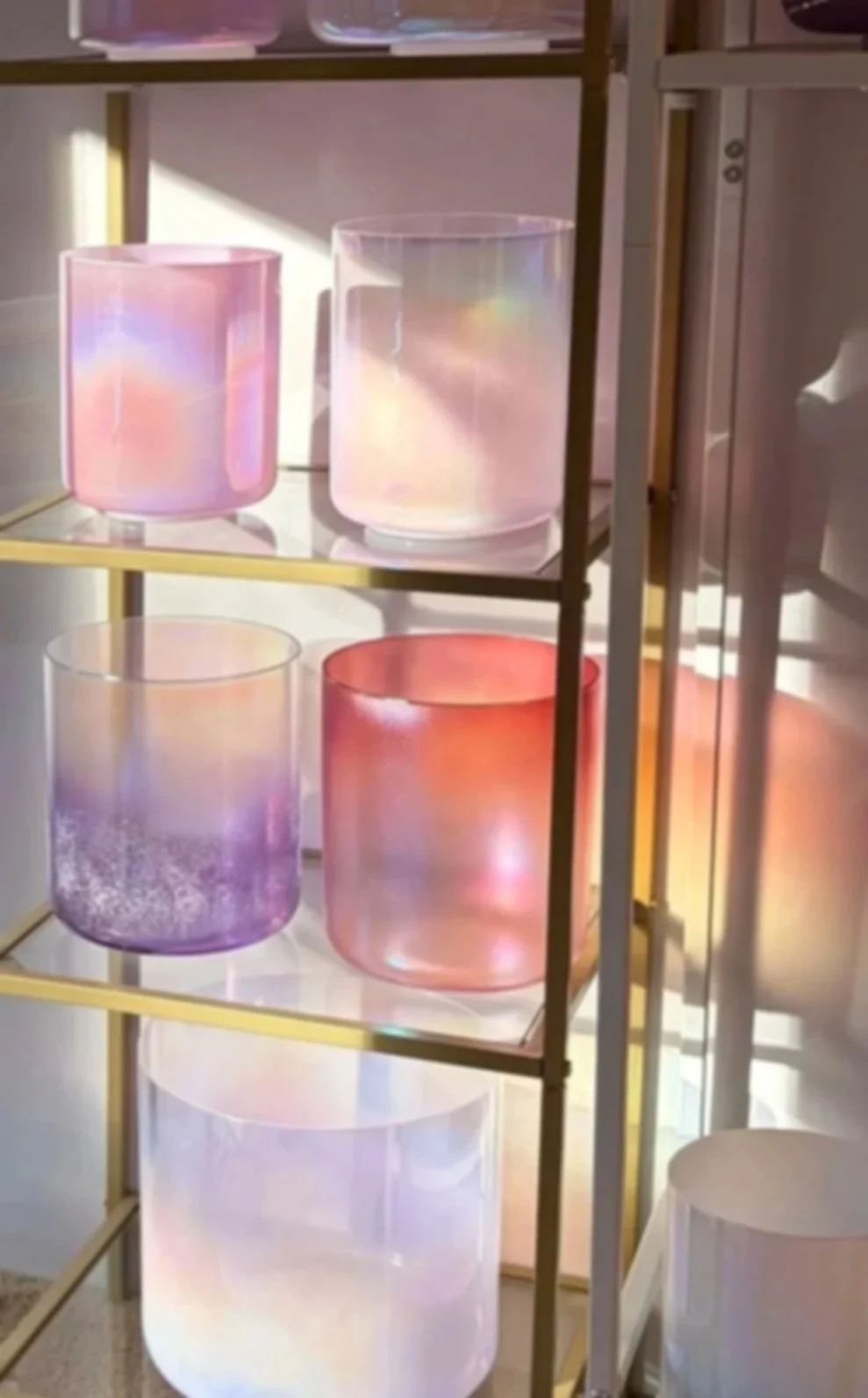
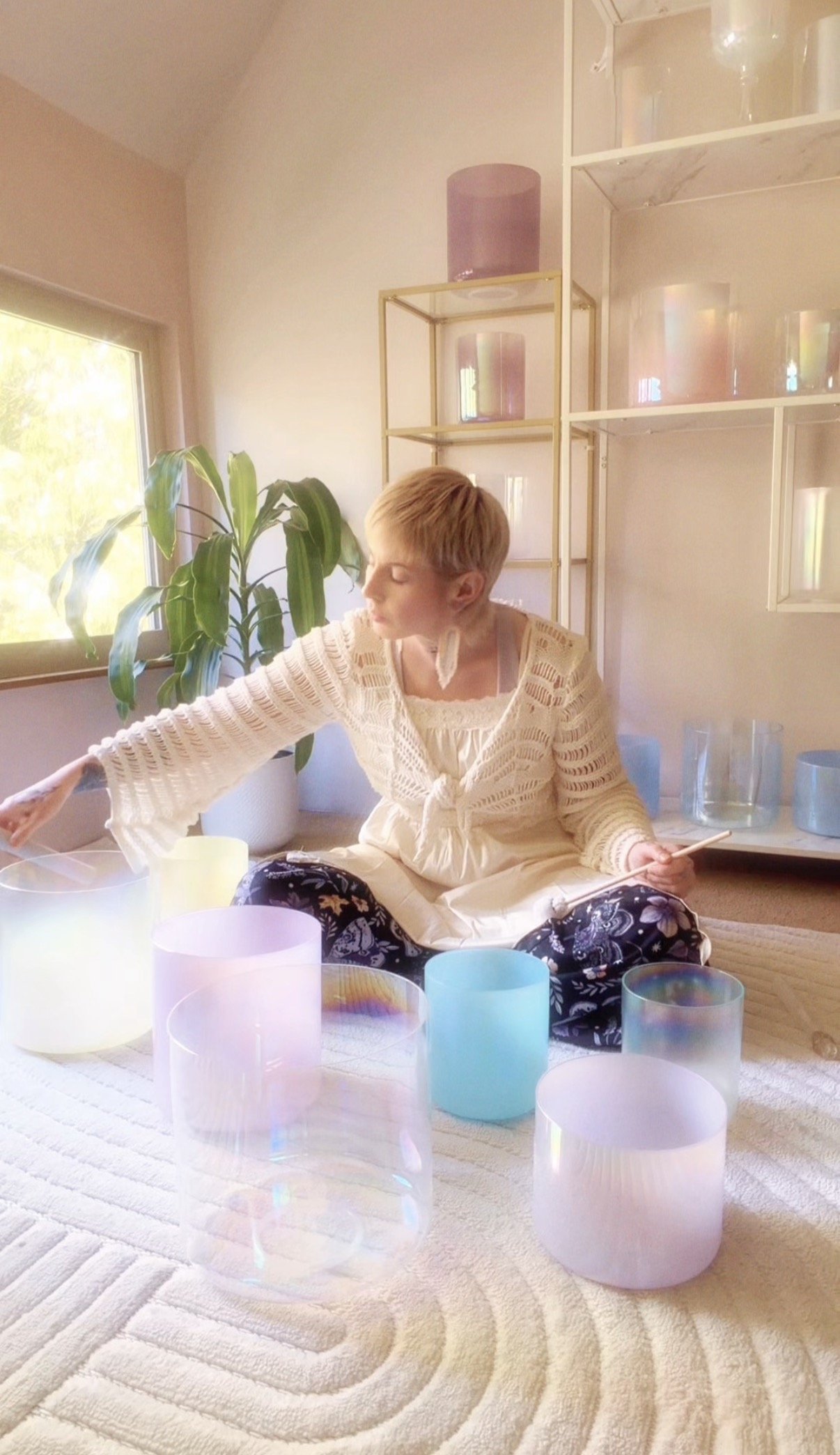
Choosing with Curiosity
If I could offer one piece of advice, it would simply be this:
Take your time.
Listen slowly.
Compare fewer bowls at once.
Notice what naturally draws your attention.
Ask questions.
Come back another day if you need to.
Trust that your relationship with sound will continue to evolve long after you've chosen your first bowl.
There is no perfect bowl.
Only the one that resonates with you, right now.
In my experience, most people discover their preferences gradually.
As they spend time listening, playing, and exploring, they naturally begin developing their own relationship with notes, octaves, harmonics, intervals, tonal textures, and resonance.
Your journey doesn't need to look like anyone else's.
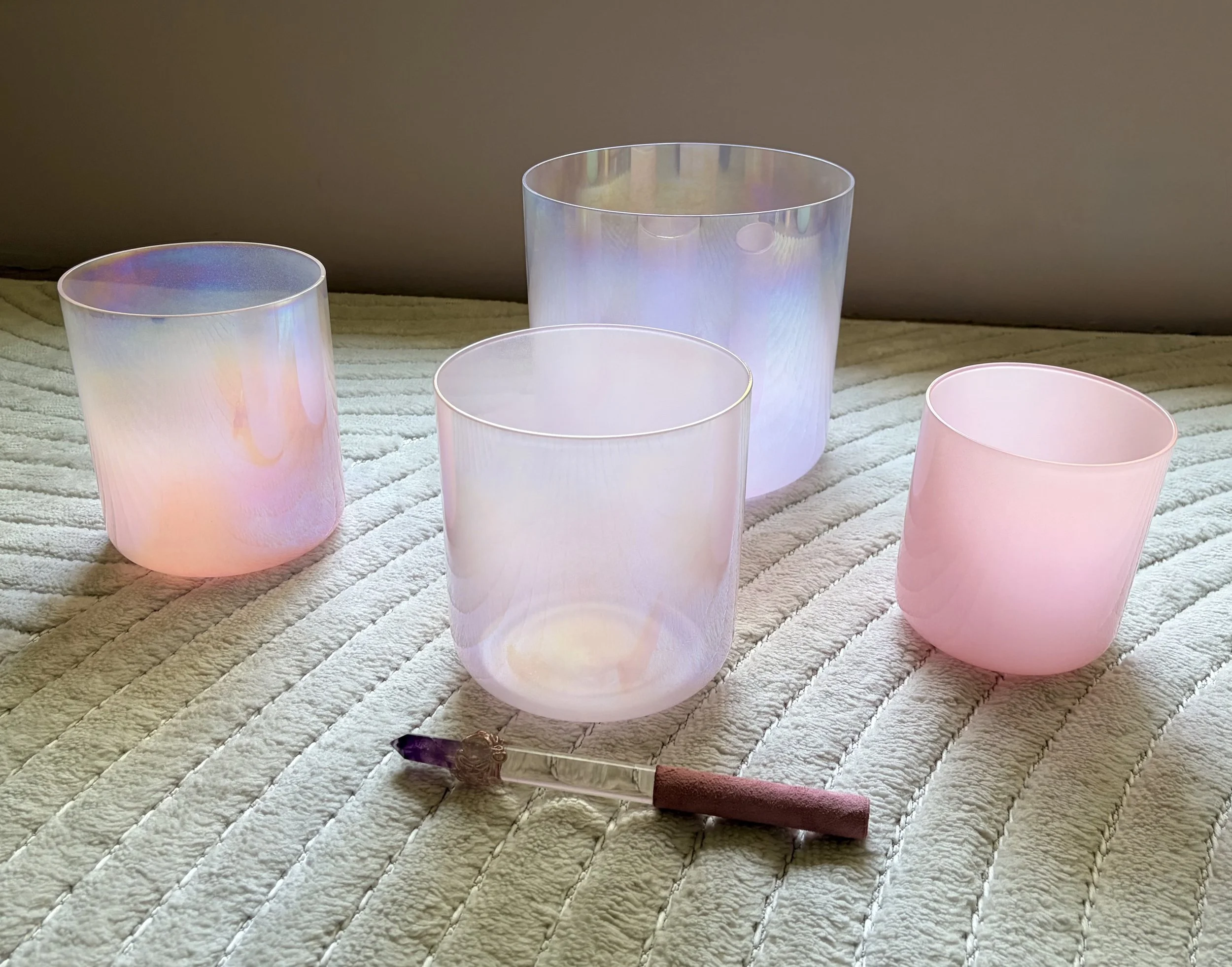
Exploring Crystal Singing Bowls
The deeper I go into this work, the more I find myself slowing down.
The world of crystal singing bowls is rich with beauty, craftsmanship, personal experience, and continual learning. Whether you're completely new to crystal bowls or have been exploring them for years, I hope this section offers a thoughtful place to begin.
My intention isn't to tell you what you should believe or experience. It's simply to share what I've learned, be transparent about what I know (and what I don't), and help you navigate this beautiful world of sound with curiosity, confidence, and discernment.
-
Crystal singing bowls are musical instruments crafted primarily from high-purity quartz. When played with a wand or mallet, they produce rich, sustained tones filled with harmonics and overtones that can be both heard and felt.
Like any instrument, every bowl has its own voice.
Even two bowls with the same note, octave, and tuning can sound remarkably different. Subtle variations in craftsmanship, shape, wall thickness, manufacturing, and playing technique all contribute to the unique personality of each instrument.
Choosing a bowl isn't simply about selecting a note, it's about discovering an instrument you genuinely enjoy listening to and playing.
-
Crystal singing bowls are crafted primarily from high-purity quartz, but no two manufacturers create them in exactly the same way.
Although frosted and clear quartz bowls both begin with the same primary material, they are created using different manufacturing processes. These differences contribute to their distinctive appearance, responsiveness, harmonic character, and overall playing experience. Alchemy bowls are generally created from clear quartz bowls before being further enhanced through each manufacturer's own proprietary methods.
Every manufacturer has its own approach to materials, equipment, forming methods, firing temperatures, shaping, finishing techniques, quality control, and craftsmanship. While some aspects of these processes are publicly shared, many manufacturers consider portions of their production methods proprietary and do not disclose every detail.
As a result, crystal singing bowls are far from a standardised product.
Two bowls may share the same note, octave, frequency, and even similar dimensions, yet differ noticeably in appearance, weight, wall thickness, responsiveness, sustain, harmonics, and overall playing experience.
Manufacturing methods influence not only how a bowl looks, but also how it feels to play and how it responds to different techniques. Because every manufacturer has its own unique approach, comparisons between brands aren't always straightforward. An alchemy bowl from one maker, for example, may differ significantly from an alchemy bowl produced by another—even when they appear similar on paper.
Beyond the manufacturing process itself, every individual bowl develops its own unique character. Small variations in craftsmanship, shape, wall thickness, density, and finishing all contribute to the way an instrument responds, sustains, and reveals its harmonics and overtones.
Like any musical instrument, no two bowls are ever truly identical. Even bowls made by the same manufacturer with the same note, octave, frequency, and design can sound and feel remarkably different.
This is one of the reasons I encourage listening whenever possible. Specifications such as note, frequency, size, materials, or appearance provide a helpful starting point, but they rarely tell the whole story.
Sometimes the bowl that looks perfect on paper isn't the one you connect with.
And sometimes the bowl you least expect becomes the one that continues to inspire you every time you play.
Some things simply need to be experienced, felt, and heard.
-
Crystal singing bowls come in many different styles, each offering its own unique playing experience, visual character, and sonic qualities. Rather than thinking of one style as "better" than another, I simply see them as different. Each has its own strengths, character, and place within a sound practice.
The "right" bowl is ultimately the one that resonates with you, your space, your budget, and the way you enjoy playing.
Frosted Bowls
Recognisable by their soft white, matte appearance, frosted bowls are often the most familiar style of crystal singing bowl.
They are generally the most affordable option and are known for their durability, strong projection, and clear, focused fundamental tone. Their ability to fill a room makes them a popular choice for larger spaces, group settings, and sound baths.
Because they're typically larger and heavier than many clear or alchemy bowls, they can be less convenient to transport between locations. Their weight and stability, however, make them an excellent choice for practitioners who primarily play in one dedicated space.
Many frosted bowls also benefit from a slightly firmer, more consistent playing technique to maintain their sound. Some practitioners enjoy this more grounded, engaged style of playing, while others naturally gravitate toward a lighter touch.
Clear Quartz Bowls
Clear quartz bowls are available in a wide variety of shapes, sizes, and artistic designs.
Compared to frosted bowls, they are generally lighter and easier to transport, making them a popular choice for practitioners who travel, facilitate in different locations, or simply appreciate a more portable instrument.
Many people are drawn to their elegant appearance, long sustain, rich harmonics, nuanced sonic character, and highly responsive playing experience.
Many clear bowls begin singing with a gentle touch. Rather than requiring continuous pressure, they often respond beautifully to a relaxed playing style, producing long, sustained tones with minimal effort while revealing beautiful layers of harmonics and overtones.
Like any musical instrument, every clear bowl has its own unique voice. Even bowls with the same note, octave, and tuning can differ beautifully in tone, sustain, responsiveness, and overall character.
Alchemy Bowls
Alchemy bowls are a category of crystal singing bowls created from high-purity quartz and enhanced through each manufacturer's own unique methods.
Depending on the maker, these bowls may incorporate precious metals, minerals, gemstones, rare earth elements, specialised finishes, or other proprietary materials and processes. Every manufacturer approaches this differently, meaning no two makers—and often no two bowls—are exactly alike.
Many practitioners are drawn to alchemy bowls for their visual artistry, rich harmonic complexity, shimmering overtones, and distinctive sonic character.
Like many clear bowls, alchemy bowls are generally lighter than comparable frosted bowls, making them easier to transport and travel with. They also tend to be highly responsive, often requiring only a gentle touch to produce beautiful, sustained tones and intricate layers of harmonics.
For many practitioners, clear and alchemy bowls invite a different relationship with playing, one that emphasises listening, finesse, and allowing the instrument to respond rather than relying on continuous physical effort.
Which Style Is Right for You?
There isn't a universal answer, and that's part of what makes this journey so special.
Some people instantly connect with the strength, simplicity, and grounded nature of frosted bowls. Others are drawn to the visual artistry, portability, harmonic richness, and responsive playing experience of clear and alchemy bowls. Many practitioners enjoy working with a combination of different bowl styles, allowing each instrument to contribute its own unique voice to the overall soundscape.
Whenever possible, I encourage listening before choosing. Specifications can provide a helpful starting point, but they rarely tell the whole story. Sometimes the bowl you least expect becomes the one you simply can't stop playing.
At the end of the day, the most meaningful bowl isn't necessarily the rarest, the most expensive, or the most visually elaborate.
It's the one that inspires you to slow down, listen deeply, and begin building your own relationship with sound.
-
The price of a crystal singing bowl reflects far more than its size alone.
Many factors can influence the cost, including:
• manufacturing methods and complexity
• craftsmanship
• specialised materials, finishes, or proprietary processes
• size and shape
• rarity and availability
• visual artistry and design
• tonal characteristics, harmonics, and sustain
• country of manufacture
• the maker and their reputation
While a higher price may reflect greater complexity in craftsmanship, artistry, or manufacturing, it doesn't automatically mean a bowl is "better."
Some people fall deeply in love with the strength, simplicity, and clear projection of a frosted bowl. Others are drawn to the visual artistry, harmonic richness, responsiveness, and nuanced sonic character often found in clear and alchemy bowls.
Rather than asking which bowl is "best," I encourage asking a different question:
Which bowl inspires me to keep listening, exploring, and playing?
Because at the end of the day, the most meaningful bowl isn't necessarily the rarest or the most expensive.
It's the one that genuinely resonates with you.
-
The deeper I go into this work, the more I find myself slowing down.
Slowing down before repeating something I've heard.
Slowing down long enough to ask,
How do I know this?
Where did this information come from?
Can it actually be verified?
The world of crystal singing bowls is filled with beautiful traditions, personal experiences, and information shared by manufacturers. It's also a space where you'll encounter many confident claims about materials, frequencies, and the specific effects a particular bowl is said to produce.
Some of these claims may be rooted in tradition, personal experience, or information provided by the manufacturer. Others can be difficult—or even impossible—for retailers and customers to independently verify, particularly when manufacturing methods and formulations are proprietary.
For that reason, I do my best to distinguish between information provided by the maker, my own observations, and my personal experience with an instrument.
If I know something, I'll happily share it.
If I don't know, I'll tell you.
I believe curiosity and discernment can exist alongside wonder. In fact, I think they deepen it.
My hope is never to convince you what to believe or promise what a bowl will do. Instead, my intention is to offer thoughtful guidance, honest conversation, and a space where you can explore these remarkable instruments with confidence, curiosity, and an open mind.
The more I learn, the more I realise how much there is still to discover.
And honestly... I think that's part of the magic.
Crystal Bowl Consultations
Alyria offers private 60-minute crystal bowl consultations for those looking to explore notes, octaves, harmonic relationships, frequencies, and bowl pairing in a more intentional and supported way.
These sessions are spacious, educational, and exploratory, with guidance tailored to your experience level, resonance, and relationship with sound.
Consultations may include:
⟡ Exploring notes, octaves, and hz frequencies
⟡ Listening to harmonic intervals and bowl relationships
⟡ Guidance around building or expanding a set
⟡ Understanding tuning systems and overtone activity
⟡ Comparing tonal textures and resonance qualities
⟡ Intuitive and embodied listening practices
60 Minute Consultation — $55 CAD
The consultation fee will be applied toward bowl purchases made during or immediately following your session.
There is absolutely no pressure to purchase during a consultation. The intention of these sessions is to support education, exploration, resonance, and informed decision-making.
Because preparation, setup, curation, and care go into each session, consultation fees are non-refundable.
Alyria is located Victoria, BC (Pacific Time). Appointment times are automatically adjusted to your local time zone whenever possible.
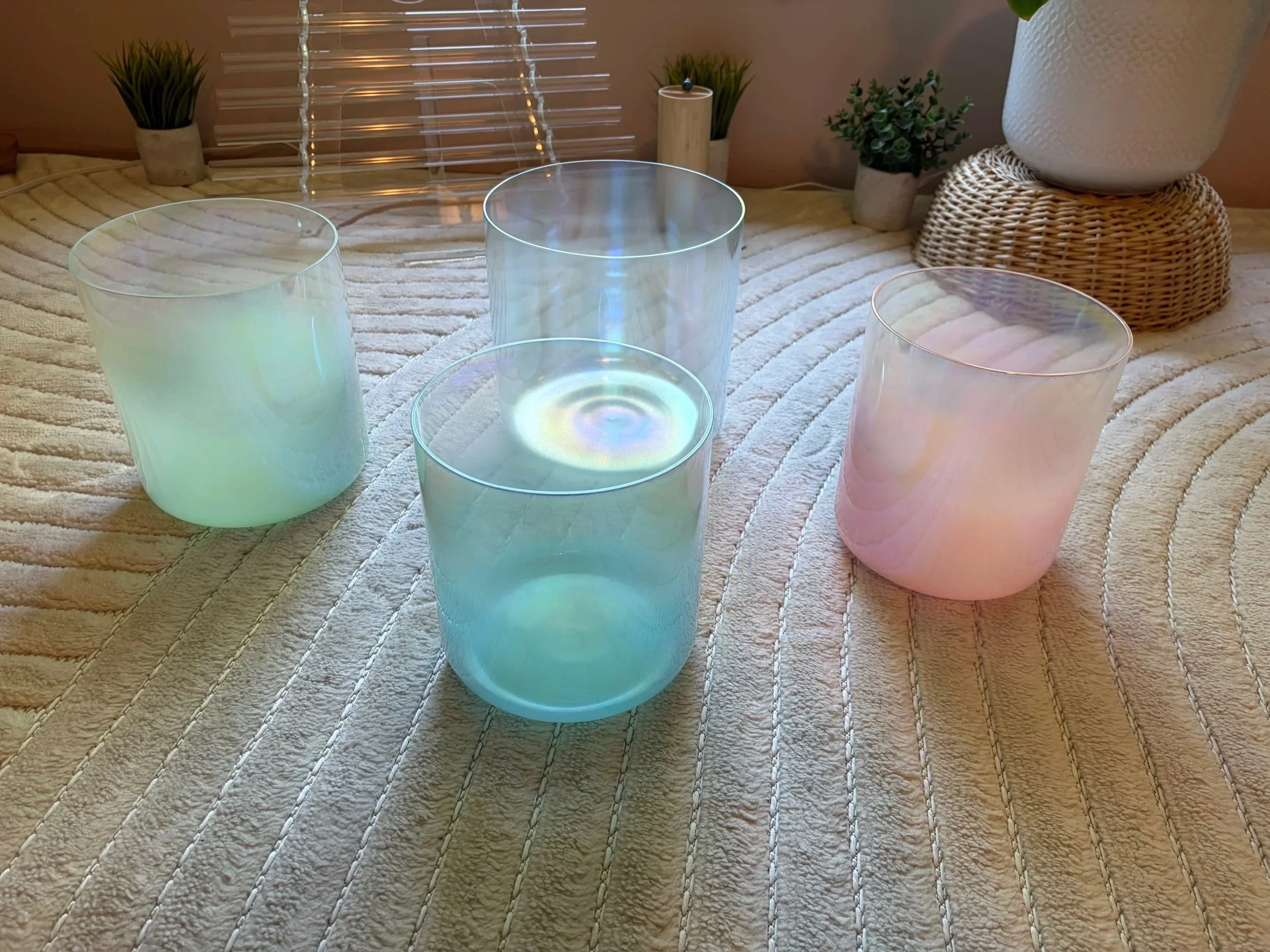
Your Questions, Answered
-
Rainbow Tones bowls are created by a family-run studio in northeastern China that I've built a trusted relationship with over the years. I continue to work with them because of the consistency, tonal clarity, and craftsmanship of their instruments.
Every bowl that becomes part of Rainbow Tones passes through my hands.
I personally unpack, inspect, listen to, play, record, photograph, and spend time with each instrument before it is ever added to the collection. If a bowl doesn't meet my standards for sound, resonance, or overall quality, it doesn't become part of Rainbow Tones.
Many bowls are also explored in relationship with one another, allowing me to thoughtfully curate harmonious collections and offer guidance based on firsthand experience rather than specifications alone.
While each bowl begins its journey with a trusted manufacturing partner, its journey with Rainbow Tones begins with careful listening. The heart of my work is in the time I spend with every instrument, the relationships I discover between them, and the education, guidance, and ongoing support I offer to each person who welcomes one into their life.
-
Choosing crystal singing bowls can feel exciting, emotional, expansive, and at times surprisingly overwhelming.
Unlike many traditional instruments, crystal bowls are highly layered and resonant. Their tones shift depending on:
The way they are played
The pressure and motion used
Room acoustics
Harmonic interactions with other bowls
The listener’s nervous system and perception
Overtone activity and resonance fields
It is very common for first-time buyers to second-guess themselves after leaving a session, especially when beginning to explore tuning apps, frequencies, intervals, and harmonic relationships.
This is a normal part of the learning process.
Over time, most practitioners begin to move away from relying solely on tuner apps and instead develop a deeper embodied relationship with listening, resonance, and tonal feeling.
-
Each Rainbow Tones bowl is individually made and finished, and no two are exactly alike. Small inclusions, lines, bubbles, surface markings, variations in texture or colour, and other cosmetic characteristics can occasionally occur during the making and finishing process. These are not signs that an instrument has been previously used and do not affect its sound or function.
-
Bowl consultations are intentionally spacious, exploratory, and collaborative.
Depending on the client’s level of experience, consultations may include:
Exploring different notes and octaves
Listening to harmonic intervals and bowl relationships
Discussing 432hz, 440hz, and 528hz tuning systems
Comparing tonal textures and resonance qualities
Understanding overtone activity and tuner app behavior
Exploring grounding vs spacious tonal fields
Guidance around building sets over time
Education around bowl sizing and octave ranges
Intuitive and embodied listening practices
Clients are welcome to:
Take notes
Record short clips for reference
Sit quietly and listen
Compare bowls slowly
Return for future sessions
The process is intentionally relational rather than rushed.
Because these are specialty instruments, consultations also involve a significant amount of preparation, curation, setup, sourcing knowledge, and behind-the-scenes care before and after appointments.
-
This is extremely common.
Crystal bowls can evoke strong emotional, sensory, and energetic responses, especially when hearing many together at once.
It is completely okay to:
Take your time
Listen slowly
Return for another session
Begin with only one or two bowls
Let your relationship with sound develop gradually
-
Yes. Rainbow Tones bowls are carefully selected and organized by frequency, musical note and octave.
However, crystal bowls are highly resonant overtone-rich instruments and may behave differently than digital tuners or traditional instruments.
-
Crystal bowls produce layered harmonics and overtones that can sometimes cause tuner apps to fluctuate or temporarily detect upper frequencies before the fundamental tone stabilizes.
This is especially common with:
Alchemy bowls
Chiming/striking rather than swirling
Sustained notes
-
Tuning apps can be useful as a general reference tool, but they are not always fully reliable for overtone-rich crystal instruments.
Embodied listening and relational harmony between bowls are often more important than chasing exact tuner readings.
-
Octave plays a major role in the overall feeling, depth, resonance, and atmosphere created by a crystal singing bowl.
Rainbow Tones most commonly carries 4th octave bowls, with the occasional 3rd octave and more rarely 5th octave bowls depending on availability and sourcing.
3rd Octave Bowls
3rd octave bowls are generally:
Larger in size
Lower in pitch
More grounding and body-centered
Deep, earthy, expansive, and immersive
Often strongly felt physically within the body
These bowls can create a powerful foundational resonance within a sound field.
4th Octave Bowls
4th octave bowls are the most common and versatile octave range carried by Rainbow Tones.
They often offer:
Balance between grounding and spaciousness
Clear harmonic relationships
Versatility for both personal and professional practice
A wide range of tonal textures and emotional qualities
5th Octave Bowls
5th octave bowls are generally:
Smaller in size
Higher in pitch
Brighter, lighter, and more spacious
Airy, celestial, ethereal, or crystalline in feeling
Often perceived as more directional or penetrating within a sound field
These bowls are more rare within Rainbow Tones inventory and may occasionally be available depending on sourcing.
There Is No “Best” Octave
Different practitioners are naturally drawn toward different:
Octaves
Frequencies
Harmonic intervals
Tonal textures
Resonance qualities
Emotional atmospheres
Some people resonate deeply with grounding lower octaves.
Others prefer lighter and more spacious tonal qualities.
Many practitioners eventually work across multiple octave ranges.This relationship often evolves over time through listening, embodiment, and lived experience with sound.
-
Rainbow Tones most commonly carries 4th octave bowls, with the occasional 3rd octave and more rarely 5th octave bowls depending on availability and sourcing.
Generally speaking, lower octaves often feel more grounding, earthy, expansive, and body-centered, while higher octaves can feel brighter, lighter, more spacious, celestial, or ethereal.
Neither is inherently better or worse — they simply create different atmospheres, textures, and relationships within a sound field.
Different practitioners are naturally drawn toward different:
Octaves
Frequencies
Harmonic intervals
Tonal textures
Resonance qualities
Emotional atmospheres
This relationship often evolves over time through listening, embodiment, and lived experience with sound.
Alyria often works relationally with:
Fourths
Fifths
Major thirds
Minor thirds
Rather than approaching bowls through rigid formulas alone.
Different intervals can create very different atmospheres.
Fourths
Often feel:
Stable
Grounding
Spacious
Supportive
Examples:
C + F
D + G
A + D
Fifths
Often feel:
Open
Expansive
Harmonically spacious
Balanced
Examples:
C + G
D + A
F + C
Thirds
Often feel:
Emotional
Warm
Tender
Textured
Expressive
Examples:
C + E
D + F
A + C
This is not a rigid rule system.
Some practitioners prefer more suspended and spacious relationships. Others prefer emotionally rich pairings. Many work intuitively between multiple interval relationships.
-
Rainbow Tones works with multiple frequencies including:
432hz
440hz
528hz
Different frequencies carry different tonal characteristics and preferences. One system is not considered inherently superior to another.
-
Yes. Alyria offers intuitive bowl curation and guidance to help clients explore harmonic relationships, intervals, tonal textures, frequencies, octaves, and resonance.
Crystal bowl consultations are intended to feel spacious, supportive, and exploratory rather than rushed.
-
No.
While some practitioners enjoy working with chakra-based systems, Alyria’s approach is more relational and intuitive, often focusing on harmonic intervals, resonance, and emotional atmosphere rather than rigid formulas.
-
Many practitioners gradually build their collection over months or years.
Sets often evolve organically through:
Experience
Practice
Personal resonance
Exposure to other practitioners
Developing tonal preference
Nervous system relationship with sound
It is very common for preferences to shift over time.
Bowls that feel unfamiliar at first may later become deeply loved, while bowls once strongly desired may eventually no longer resonate in the same way.
This is a normal part of developing a relationship with sound.
-
Alyria also offers support with:
Intentional bowl pairing
Harmonic relationship exploration
Set building guidance
Custom ordering by note, octave, and hz frequency
Expanding existing sets over time
Because sourcing changes frequently, certain notes, octaves, tunings, and alchemy styles may vary in availability.
-
In-person bowl purchases may qualify for exchange/store credit within 7 days if the bowl is returned in original condition.
Shipped bowls are final sale.
The Rainbow Tones Philosophy
Every crystal singing bowl has its own voice.
Not simply because of its note or octave, but because of the countless relationships between its craftsmanship, materials, overtone character, and the hands that shaped it. No two are ever exactly alike.
Rainbow Tones was born from the belief that choosing an instrument should feel thoughtful, personal, and deeply rooted in listening. Every bowl is carefully selected for its voice, its character, and the way it naturally lives within a wider harmonic field.
I intentionally source directly and remain independent so my focus can remain where I believe it belongs: exceptional craftsmanship, thoughtful curation, meaningful relationships, and ongoing support that continues long after a bowl has found its new home.
My pricing reflects that same philosophy, honouring the craftsmanship behind each instrument while respecting the people who will spend years exploring it.
Because bringing a bowl home isn't the end of the journey.
It's where the journey begins.
⟡